THE GIRL WRITING AS
HERSELF....
It was probably the April of
1974. Bangalore was getting warm and
gulmohars were blooming at
the IISc campus. I was the only girl in my
postgraduate department and
was staying at the ladies' hostel. Other
girls were pursuing research
in different departments of Science. I was looking forward to going abroad to
complete a doctorate in computer science. I had been offered scholarships from
Universities in the US... I had not thought of taking up a job in India.
One day, while on the way to
my hostel from our lecture-hall complex,
I saw an advertisement on the
notice board. It was a standard
job-requirement notice from
the famous automobile company Telco (now
Tata Motors)... It stated
that the company required young, bright
engineers, hardworking and
with an excellent academic background, etc.
At the bottom was a small
line: 'Lady Candidates need not apply.' I read it and was very upset. For the
first time in my life I was up against gender discrimination.
Though I was not keen on
taking up the job, I saw it as a challenge. I
had done extremely well in
academics, better than most of my male
peers... Little did I know
then that in real life academic excellence
is not enough to be
successful?
After reading the notice I
went fuming to my room. I decided to inform
the topmost person in Telco's
management about the injustice the
company was perpetrating. I
got a postcard and started to write, but
there was a problem: I did
not know who headed Telco
I thought it must be one of
the Tatas. I knew JRD Tata was the head of
the Tata Group; I had seen
his pictures in newspapers (actually, Sumant Moolgaokar was the company's
chairman then) I took the card, addressed it to JRD and started writing. To
this day I remember clearly what I wrote. 'The great Tatas have always been pioneers.
They
are the people who started
the basic infrastructure industries in India, such as iron and steel,
chemicals, textiles and locomotives they have cared for higher education in
India since 1900 and they were responsible for the establishment of the Indian
Institute of Science. Fortunately, I study there. But I am surprised how a
company such as
Telco is discriminating on
the basis of gender.'
I posted the letter and
forgot about it. Less than 10 days later, I received a telegram stating that I
had to appear for an interview at Telco's Pune facility at the company's
expense. I was taken aback by the telegram. My hostel mate told me I should use
the opportunity to go to Pune free of cost and buy them the famous Pune saris
for cheap!
I collected Rs 30 each from
everyone who wanted a sari when I look
back, I feel like laughing at
the reasons for my going, but back then they seemed good enough to make the
trip.
It was my first visit to Pune
and I immediately fell in love with the city.
To this day it remains dear
to me. I feel as much at home in Pune as I
do in Hubli, my hometown. The
place changed my life in so many ways.
As directed, I went to
Telco's Pimpri office for the interview.
There were six people on the
panel and I realized then that this was serious business.
'This is the girl who wrote
to JRD,' I heard somebody whisper as soon as I entered the room. By then I knew
for sure that I would not get the job. The realization abolished all fear from
my mind, so I was
rather cool while the
interview was being conducted.
Even before the interview
started, I reckoned the panel was biased, so
I told them, rather
impolitely, 'I hope this is only a technical interview.'
They were taken aback by my
rudeness, and even today I am ashamed about my attitude. The panel asked me
technical questions and I answered all of them.
Then an elderly gentleman
with an affectionate voice told me, 'Do you
know why we said lady
candidates need not apply? The reason is that we
have never employed any
ladies on the shop floor. This is not a co-ed
college; this is a factory.
When it comes to academics, you are a first ranker throughout. We appreciate
that, but people like you should work in research laboratories.
I was a young girl from
small-town Hubli. My world had been a limited place.
I did not know the ways of
large corporate houses and their difficulties, so I answered, 'But you must
start somewhere, otherwise no woman will ever be able to work in your factories.'
Finally, after a long
interview, I was told I had been successful. So this was what the future had in
store for me. Never had I thought I would take up a job in Pune. I met a shy
young man from Karnataka
there, we became good friends
and we got married.
It was only after joining
Telco that I realized who JRD was: the
uncrowned king of Indian
industry. Now I was scared, but I did not get
to meet him till I was
transferred to Bombay. One day I had to show
some reports to Mr
Moolgaokar, our chairman, who we all knew as SM. I
was in his office on the
first floor of Bombay House (the Tata
headquarters) when, suddenly
JRD walked in. That was the first time I
saw 'appro JRD'. Appro means
'our' in Gujarati. This was the affectionate term by which people at Bombay
House called him. I was feeling very nervous, remembering my postcard episode.
SM introduced me nicely, 'Jeh (that's what his close associates called him),
this
young woman is an engineer
and that too a postgraduate.
She is the first woman to
work on the Telco shop floor.' JRD looked at
me. I was praying he would
not ask me any questions about my interview
(or the postcard that
preceded it).
Thankfully, he didn't.
Instead, he remarked. 'It is nice that girls
are getting into engineering
in our country. By the way, what is your
name?'
'When I joined Telco I was
Sudha Kulkarni, Sir,' I replied. 'Now I am
Sudha Murthy.' He smiled and
kindly smile and started a discussion
with SM. As for me, I almost
ran out of the room.
After that I used to see JRD
on and off. He was the Tata Group chairman and I was merely an engineer. There
was nothing that we had in common. I was in awe of him.
One day I was waiting for
Murthy, my husband, to pick me up after office hours. To my surprise I saw JRD
standing next to me. I did not know how to react. Yet again I started worrying
about that postcard.
Looking back, I realize JRD
had forgotten about it. It must have been a small incident for him, but not so
for me.
'Young lady, why are you
here?' he asked. 'Office time is over.' I said, 'Sir, I'm waiting for my
husband to come and pick me up.' JRD said, 'It is getting dark and there's no
one in the corridor.
I'll wait with you till your
husband comes.'
I was quite used to waiting
for Murthy, but having JRD waiting alongside made me extremely uncomfortable.
I was nervous. Out of the
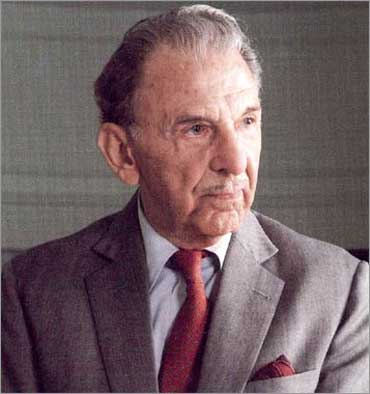
corner of my eye I looked at him. He wore a simple white pant and shirt. He was
old, yet his face was glowing.
There wasn't any air of
superiority about him. I was thinking, 'Look at this person. He is a chairman,
a well-respected man in our country and he is waiting for the sake of an
ordinary employee.'
Then I saw Murthy and I
rushed out. JRD called and said, 'Young lady, tell your husband never to make
his wife wait again.'
In 1982 I had to resign from
my job at Telco. I was reluctant to go, but I really did not have a choice. I
was coming down the steps of Bombay House after
wrapping up my final
settlement when I saw JRD coming up. He was absorbed in thought. I wanted to
say goodbye to him, so I stopped. He saw me and paused.
Gently, he said, 'So what are
you doing, Mrs. Kulkarni?' (That was the way he always addressed me.) 'Sir, I
am leaving Telco.'
'Where are you going?' he
asked. 'Pune, Sir. My husband is starting a company called Infosys and I'm
shifting to Pune.'
'Oh! And what will you do
when you are successful.'
'Sir, I don't know whether we
will be successful.' 'Never start with
diffidence,' he advised me
'Always start with confidence. When you are
successful you must give back
to society. Society gives us so much; we must reciprocate. Wish you all the
best.’
Then JRD continued walking up
the stairs. I stood there for what seemed like a millennium. That was the last
time I saw him alive.
Many years later I met Ratan
Tata in the same Bombay House, occupying the chair JRD once did. I told him of
my many sweet memories of working with Telco. Later, he wrote to me, 'It was
nice hearing about Jeh from you. The sad part is that he's not alive to see you
today.'
I consider JRD a great man
because, despite being an extremely busy
person, he valued one
postcard written by a young girl seeking justice. He must have received
thousands of letters everyday. He could have thrown mine away, but he didn't do
that. He respected the intentions of that unknown girl, who had neither
influence nor money, and gave her an opportunity in his company. He did not
merely give her a job; he changed her life and mindset forever.
Close to 50 per cent of the
students in today's engineering colleges are girls. And there are women on the
shop floor in many industry segments. I see these changes and I think of JRD.
If at all time stops and asks me what I want from life, I would say I wish JRD
were alive today to see how the company we started has grown. He would have
enjoyed it wholeheartedly.
My love and respect for the
House of Tata remains undiminished by the
passage of time. I always
looked up to JRD. I saw him as a role model
for his simplicity, his
generosity, his kindness and the care he took
of his employees.
Those blue eyes always
reminded me of the sky; they had the same vastness and magnificence.
(Sudha Murthy is a widely
published writer and chairperson of the Infosys Foundation involved in a number
of social development initiatives. Infosys chairman Narayana Murthy is her
husband.)
Article sourced from: Lasting
Legacies (Tata Review- Special Commemorative Issue 2004), brought out by the
house of Tatas to commemorate the 100th birth anniversary of JRD.